56,309 UNITS COMPLETED ACROSS THE US

PROJECTS UNDER CONSTRUCTION


ALTITUDE BY VINTAGE
Reno, NV
Work at Altitude By Vintage in west Reno has been completed, marking the successful rehabilitation of 293 units across three pre-existing multifamily community sites. We at PRECISION appreciate the opportunity to partner with Vintage Housing and Architecture All Forms on this important affordable housing preservation project.
Extensive interior and exterior improvements were completed while residents remained in place throughout construction. Occupied rehabilitation work of this scale requires careful coordination, phased scheduling, and ongoing communication to maintain construction progress while minimizing disruption for residents and property operations.
The completed improvements support workforce and low-income households earning between 30% and 60% of the area median income and help preserve long-term housing stability within the community. Rehabilitation and preservation projects like Altitude by Vintage continue to play an important role in maintaining and improving existing affordable housing inventory while extending the useful life of established multifamily communities.
Congratulations to our partners, our crew, and all project teams whose collaboration helped bring the project to completion. Altitude by Vintage represents another completed affordable housing rehabilitation for the Reno community!


CORNERS AT BELMONT
Belmont, CA
Construction progresses at The Corners at Belmont, our 37-unit affordable housing project, split by Hill Street into two highly constrained sites. We continue to make forward momentum while navigating the challenges of construction logistics associated with a non-contiguous urban site.
This project incorporates all-electric systems, rooftop solar photovoltaics, high-efficiency building components, and water-conscious landscape strategies that support long-term sustainability and building performance. Once completed, the development will provide much-needed affordable housing within close proximity to public transit, services, and the surrounding Belmont community.
We appreciate the opportunity to partner with Linc Housing and Torti Gallas + Partners on this thoughtfully designed affordable housing community.
The Corners at Belmont represents another important affordable housing project focused on delivering efficient housing within a complex urban environment. We further extend our appreciation to the City of Belmont, our partners, and our crews, whose work continues to move this project forward.


THE NEST ON EXPOSITION
Los Angeles, CA
The Nest on Exposition new-build is nearly complete. This 25-unit, fully modular, four-story interim housing community, developed by Wellnest and designed by LOHA, demonstrates how modular construction can be successfully implemented within dense urban environments.
In transforming a portion of an underutilized large surface parking lot into a resource for community members in need, this project will house transition-aged youth (18-25) who risk facing homelessness. The community is designed to provide stability and transitional support for youth who are aging out of foster care.
In addition to helping address the critical need for supportive housing, the project reflects the growing role of modular construction in broader efforts to deliver housing while maintaining long-term durability and performance standards. Delivery of the modular units, fabricated off-site, required extensive coordination of staging, transportation, crane operations, and installation sequencing throughout all phases of construction.
As construction moves toward completion, The Nest on Exposition will represent another example of alternative delivery methods being applied to complex housing projects in high-density urban settings. We are immensely grateful for the opportunity to partner with Wellnest and Lorcan O'Herlihy Architects on this innovative housing project and would like to thank all our partners and our crews for helping make this project a reality.
INDUSTRY

LIHTC REHABILITATION PROJECTS: WHEN TEMPORARY RELOCATION CAN REDUCE TOTAL PROJECT COST
For many Low-Income Housing Tax Credit (LIHTC) rehabilitation projects, temporary resident relocation is often viewed as the more expensive option because of moving expenses, temporary accommodations, and additional coordination requirements. However, when total project costs are evaluated, temporary relocation can sometimes result in net savings to the owner by reducing construction duration, improving productivity, and lowering project-related costs associated with extended schedules.
The primary advantage of temporary relocation is unrestricted access to units. With residents temporarily relocated, construction teams can work more efficiently, coordinate trades more effectively, and complete work without the interruptions commonly associated with occupied units. Improved access allows for streamlined sequencing, reduced remobilization, and more predictable production rates throughout the project.
By comparison, in-place rehabilitation is often assumed to be the lower-cost approach because residents remain in their homes during construction. However, occupied work environments can reduce productivity by limiting access, restricting workable hours, and requiring ongoing coordination between residents, property management teams, and trade partners. Crews frequently work around furnishings and personal belongings while managing smaller work areas, repeated mobilization, and additional supervision requirements. These conditions can extend schedules and increase labor costs while creating operational inefficiencies that affect overall project economics.
For owners, extended construction schedules can carry costs beyond construction labor alone. Longer project durations may increase general conditions, project management expenses, financing costs, compliance administration, and operational disruptions. In some cases, these additional costs can exceed the expense of temporary relocation, resulting in a lower total project cost and a shorter path to completion.
The challenges associated with occupied rehabilitation can become even more pronounced in senior housing and special needs communities, where mobility limitations and resident support requirements create additional logistical considerations that must be carefully planned during preconstruction.
The appropriate approach ultimately depends on the scope and intensity of the rehabilitation work. In-place rehabilitation may remain effective for lighter improvements where units can remain habitable during construction. More invasive work involving major system upgrades, utility disruptions, or full kitchen and bathroom replacements may benefit from temporary relocation strategies that provide uninterrupted construction access and maximize construction efficiency.
Many rehabilitation projects ultimately utilize a targeted relocation strategy that combines both approaches. Residents may be temporarily relocated only in areas where work is most disruptive, while lighter scopes are completed with residents remaining in place. This hybrid approach can help balance resident impact, schedule efficiency, and overall project cost.
As affordable housing preservation work continues across California and other high-demand markets, evaluating total project cost rather than relocation cost alone can provide a more complete picture of project economics. When construction efficiency, schedule duration, financing impacts, and operational considerations are factored into the equation, temporary relocation may offer benefits that extend beyond the jobsite and contribute to overall project value.
PEOPLE & PURPOSE
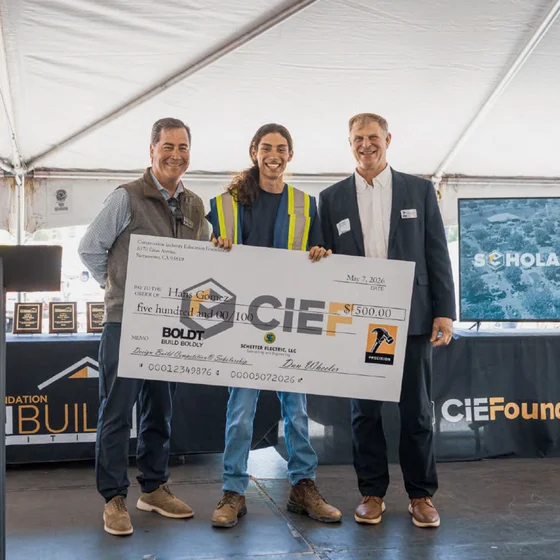

SUPPORTING THE NEXT GENERATION OF CONSTRUCTION PROFESSIONALS
Students from Yuba City High School participated in the 2026 NorCal CIEF | SRBX High School Design Build Competition held at American River College, joining teams from across Northern California in a hands-on construction event focused on teamwork, problem solving, and practical building skills.
PRECISION continued its long-time support of the competition by sponsoring the Yuba City High School team as students worked through each phase of the build process, from framing and layout through final assembly. Events such as the Design Build Competition provide students with an opportunity to apply classroom and trade skills within a real-world construction environment while working alongside industry mentors, instructors, and construction professionals.
The annual competition, organized through the Construction Industry Education Foundation (CIEF) and the Sacramento Regional Builders Exchange (SRBX), continues to play an important role in exposing students to careers in the skilled trades and construction industry. The event also highlights the value of workforce development programs that help prepare the next generation of builders, tradespeople, and construction professionals.
PRECISION extends its appreciation to CIEF, SRBX, American River College, the instructors, volunteers, and industry partners who helped organize and support the event. Congratulations again to the Yuba City High School Construction Team for their teamwork, focus, and craftsmanship throughout the competition.

AFFORDABLE HOUSING ROUNDTABLE
On March 26, PRECISION participated in the Affordable Housing Developers Roundtable hosted by Nixon Peabody, joining developers, project partners, and housing professionals to discuss current affordable housing challenges and development activity throughout the region.
As a reception sponsor, PRECISION was pleased to connect with organizations and industry partners committed to advancing affordable housing. The evening highlighted the value of collaboration across development, construction, financing, and project delivery as the industry continues to address California's evolving housing needs.
We appreciate Nixon Peabody for hosting the event and thank everyone who contributed to the thoughtful discussions.
COMMUNITY PARTNERSHIP: KIVA
For more than 15 years, PRECISION has partnered with Kiva because we believe small opportunities can make a lasting difference.
When families in Wejdan's community in Jordan need affordable clothing, many know exactly where to turn.
As a Palestinian refugee, Wejdan has worked hard to build a home-based clothing business that supports her family. Like many entrepreneurs, limited access to capital made it difficult to expand her inventory and meet customer demand. A small Kiva loan is helping her purchase additional women's, men's, and children's clothing, along with seasonal apparel and storage shelves, allowing her to grow her business and strengthen her family's income.
Wejdan's story reflects a challenge faced by entrepreneurs everywhere: access to capital. Sometimes the difference between standing still and moving forward isn't a large investment, but a relatively small amount of funding at the right time.
Since joining the Kiva community in 2009, PRECISION has helped support entrepreneurs around the world through microfinance lending. Every loan tells a different story, but they all share something familiar: people working to create opportunities for themselves, their families, and their communities.
Because Kiva loans are repaid, funds can be reinvested into future entrepreneurs, creating opportunities that continue from one business to the next.
What makes these stories so meaningful isn't the size of the loan. It's the reminder that, wherever we live, many of us share the same hopes: to support our families, build something meaningful, and create a better future. We are all connected.
We invite you to explore the entrepreneurs supported through the PRECISION Kiva Lending Team, and discover their stories.We invite you to explore the entrepreneurs supported through the PRECISION Kiva Lending Team, and discover their stories.


EMPLOYEE RECOGNITION: MADELINE NAGLE
Congratulations to Madeline Nagle, Assistant Project Manager in PRECISION's North Bay Division, on her well-deserved Q1 quarterly employee award.
Madeline recently took her YETI cooler on an adventure through the Santa Cruz Mountains, Yosemite, and the Eastern Sierra, where she experienced a rare display of the aurora from a hot spring outside Bishop, California.
Thank you, Madeline, for everything you contribute to the team. We're proud to recognize your hard work and appreciate you sharing a glimpse of your adventure with us!
CONNECT WITH PGCC
Let us know how we can help make your next project a success and continue strengthening our positive impact on California housing.
Michael Richards
Regional Vice President/General Manager
mrichards@precisiongc.com


